Here are the 31 books I read in 2023, a total that’s a bit lower than average. I’m not sure what I was doing instead. Writing blog posts? Working on Basic Fantasy RPG projects? Let’s see what I can remember about these books, going in reverse chronological order because I keep track in Google Keep which doesn’t let me sort by date added.
Sarcasm and Glory: A Rock and Roll Testimonial by J. D. Yorke
This book arrived at Christmas and I think I read through it in a day or two. I think I heard about it via Albert Bouchard, and the book is dedicated to Albert and his brother, two founding members of Blue Oyster Cult. The book seems to be a collection of Facebook posts. It was like reading through someone’s timeline going back several years.
The Siege of the Black Citadel by Chuck Dixon
This is the first in a new series of Conan novels by the comic book writer who invented Bane and took over from Mike Baron on The Punisher back in the 90s. It’s good. Dixon is an excellent writer, and I enjoyed Levon’s Trade a couple of years ago. There’s already a second book in the series that I haven’t picked up yet. The book itself has a pulpy feel being about 7×9 and thin like an old magazine, and it has cool illustrations inside.
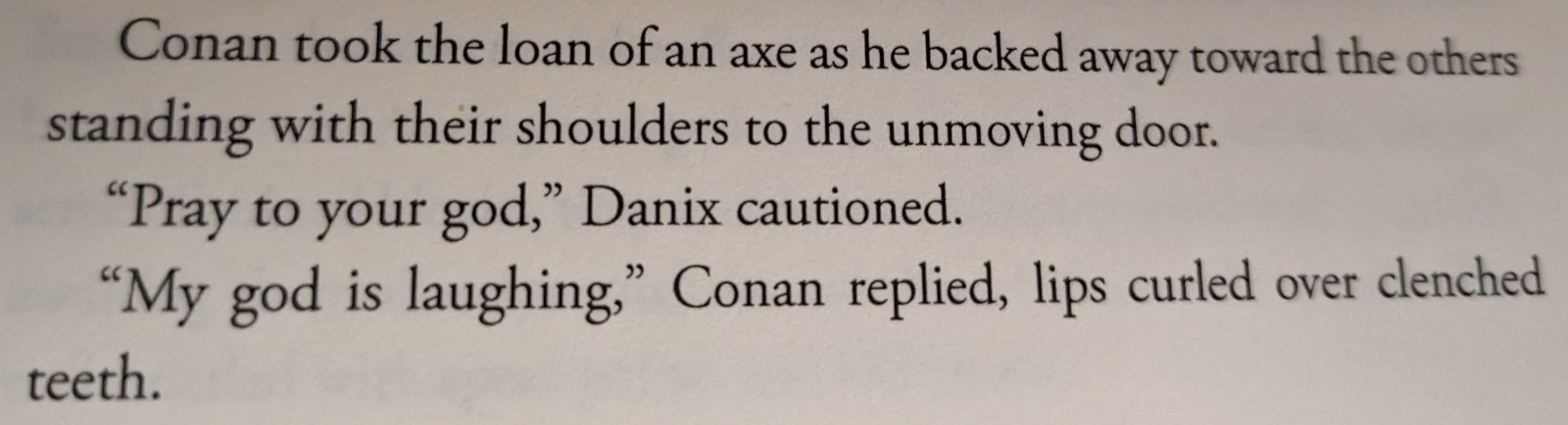
I clipped that short passage. You know when things are really tough, and people around you are talking about praying for help, and you realize your god, Crom, is just laughing at you from atop his mountain? It can be motivating.
The Beginning Was The End by Jade Dellinger and David Giffels
This is a history of the band DEVO. It’s an abridged version of an earlier edition that I couldn’t find. I read this book right around the time that we went to Paso Robles to see DEVO in concert. Some of the details in the book I already knew from other sources. Mark Motherbaugh was on Rick Rubin’s Broken Record podcast last year and told the story about meeting Richard Branson in Jamaica. Then I saw him retell it on a Tony Hawk podcast.
The King of Elfland’s Daughter by Lord Dunsany
This novel is on Gygax’s Appendix N list, a classic. It has an ethereal feel, almost a myth. The plot surprised me all along. I was expecting the elves to be more gnarly as in Anderson’s Broken Sword. One thing I took away from this for playing D&D is how there can be lines dividing worlds that you can simply cross (if the king allows you).
Dominance and Submission by Martin Popoff
Don’t let this out, but if Martin keeps writing BOC books, I will keep buying them. This book covers the studio albums in a conversational style similar to Martin’s YouTube channel, The Contrarians. Five guys BOC fans talking about what they like or don’t like about the album, going track by track. I like how when I get one of his books, they come wrapped in a Canadian newspaper and Martin signs in the inside.
The Randolph Carter Tales by H. P. Lovecraft
I’m slowly making my way through a complete collection of Lovecraft that came as several books. This one had the Carter tales, mostly one long novel about Carter making his way through dreamland. As with the Dunsany novel, there’s a journey into another realm that reminds me of Haderax in my own Terror in Tosasth adventure book for Basic Fantasy RPG. It also reminds me of Sign of the Labrys by Margaret St. Clair.
Company of One by Paul Jarvis
I think I saw this on Hacker News and bought it on impulse. I wrote a whole blog post about the ideas in the book: To Grow, or Not to Grow.
Real-World Next.js by Michele Riva
My most important client, Clorox, is doing more site in Next.js, and I need to be aware of how it works in my role as platform architect. This book is 8.5×11 and pretty thick. I bet a lot of people read it on a computer or tablet. I can’t help thinking that Next is a reinvention of all the PHP work that went on a couple of decades ago.
Turn the Ship Around! by L. David Marquet
I feel like this book was on my Amazon wishlist for years, probably from back when I was a VP at Clear Ink. Then it showed up as a Christmas gift in 2022. It’s about a Navy guy who helped get teams on submarines working better together. One idea that comes back to me often is the approach of stating intent rather than asking for permission or agreement. I’ve found myself sometimes telling dev teams, “I intend to release a new version upstream that takes us to PHP 8.2 this month,” rather that just doing it or hashing it out in a meeting. It streamlines interactions.
First Blood by David Morrell
This is the novel that inspired the Stalone movie. As is typical, the novel is more interesting than the movie, which is a good movie. It’s a straight up adventure with lots of fighting that ends in a more 1970s way than the movie.
The Road to React by Robin Wierych
This book is about React without much about Next. I think it was the right choice to read about React first and then about the particular way Next uses it.
Laughing Shall I Die by Tom Shippey
Shippey is an expert on Tolkien, but this book is about viking sagas. In some ways, it’s a companion to the TV series, Vikings. It goes over the sagas and considers which parts could be true. Reading this book inspired me to watch the show, which starts strong and doesn’t live up to the first half by the end. There are many great ideas for D&D in this overview of the sagas, and the historical parts of quite interesting on their own. The thing I remember most is the story of a viking facing decapitation who asks that someone hold his long hair back. When the axe comes down, he jerks up so that it chops off the hands of the guy holding his hair. It was a brief moment in the show, but I was happy to see it after having read about it.
Tony Bath’s Ancient Wargaming by John Curry
Bath was a pioneer in organizing huge wargaming campaigns, and this book collects his writings about how to design battle rules and how to run the long campaign. I knew it was a classic and wanted to glean ideas for my long-running Basic Fantasy RPG campaign. It’s has a quintessential 1970s style, similar to D&D original little brown books.
Modern JavaScript for the Impatient by Cay Horstmann
Long ago, my PHP book was a sibling to Horstmann’s Java book in Prentice Hall’s “Core” series. His book is currently in a 12th edition! I knew he wrote well, so I picked up his book about JavaScript to catch up on the stuff that’s appeared in the last few years. This book is oriented toward readers who have already mastered one or more programming languages and just need to know how JavaScript is different. That’s exactly right for me, although much of it was still review rather than learning anything new. I really enjoyed this book.
Arbiter of Worlds by Alexander Macris
Macris is the author of the D&D retroclone Adventurer, Conqueror, King. This book is a collection of advice about mastering roleplaying games of all types. I tend to agree with everything Alex states here, as well as the additional information available in his YouTube channel.
The White Pill by Micheal Malice
Malice, popular anarchist and writer, published this book that generally covers anarchist and communist thinking during the 19th and 20th centuries. Various details about the Russia and the rise of the Soviets were interesting.
Hiero’s Journey and The Unforsaken Hiero by Sterling Lanier
I read a collected volume of the two Hiero books by Lanier. The protagonist is a mystic in post-apocalyptic Canada. The books are listed in Appendix N and influenced both Advanced D&D and Gamma World. The magic of this world is primary psychic and technological. Strange monsters populate the landscape, some mutated in body or gaining sentience. And there are cryptic factions scheming to control the world. The writing is pulpy and not at all like modern “hero’s journey” stuff. These books continue to inspire me.
Outlive by Peter Attia
I think I grabbed this on impulse based on a Cernovich recommendation. The information in this book was mostly review for me, except Attia’s life story. It probably didn’t get me to pay more attention to the quantity of protein in my diet.
The Dragon Masters by Jack Vance
I enjoy everything by Vance, and I have been rationing his books, not reading them all at once. This book is not stereotypical fantasy. It’s more properly science fiction in the way Vance designs worlds where a pocket of low technology exists in a universe of high technology. In some ways, it’s like Anderson’s High Crusade, where medieval people are plucked off the earth to fight battles with high tech aliens, except in The Dragon Masters, high tech aliens are invading a world that’s forgotten much of its scientific knowledge.
Wired for Love by Stephanie Caciopoo
This is a light book about the science of love intertwined with the author’s personal story about losing her husband.
The Lost Dungeon of Tonisborg
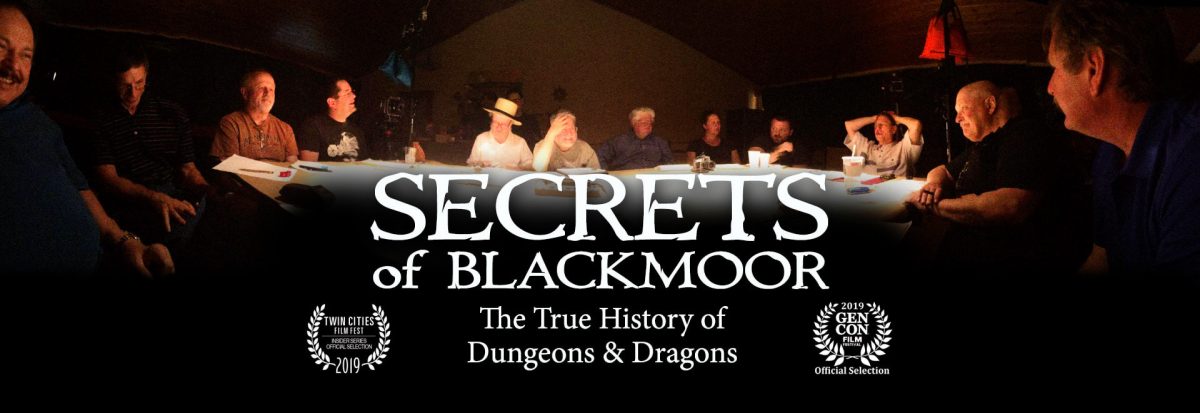
From the guys who produced Secrets of Blackmoor, this book collects everything about an old school dungeon played in the 1970s. Plus, it has an RPG system similar to D&D. This is a valuable artifact for learning how the early game was played. I’m sure I’d never just run this as is because I enjoy creating adventures myself, but there’s so much to borrow here. I have a nice, purple hardback from the original release, but you can get an inexpensive paperback at The Fellowship of the Thing.
Kids of the Black Hole by Dewar MacLeod
This book covers the punk scene in Los Angeles associated with the Black Hole apartments. I’ve read a lot of books about punk that overlap, so it’s hard to remember which things I learned specifically from this book. I still enjoy reading these types of books about music history.
Here’s Your Irony Back by Raymond Pettibon
This big coffee table book shows off some of Pettibon’s artwork from some time ago. I suppose most people know him from Black Flag album covers, so I guess this book is adjacent to my interest in punk rock history. I appreciate being able to look closely at the drawings and the words. I also enjoy Pettibon’s messages on X.
Why We Meditate by Daniel Goleman and Tsoknyi Rinpoche
I meditate every morning, and I have for several years. I’m sure it reduces stress. I purposely meditate first thing in the morning to counteract the cortisol released by my body to wake me up. It also seems to provide an ongoing base of calm as long as I keep the up the practice. As such, I am keen to learn more about meditation because I think I could improve.
This book pairs a scientist with a monk, seeking an integration of tradition and the science to explain the effectiveness. It’s not a manual. It’s more a narrative and an overview with a few hints for what they might learn next.
The New Abnormal by Aaron Kheriaty
I think this was a gift I felt obligated to read. It’s a rundown on all the absurdities that started in 2020.
Lamentations of the Flame Princess by James Raggi
LotFP, as people call it, is a D&D retroclone with a reputation for lewd artwork. The author, James Raggi, posts interesting videos on YouTube and I think he was having a hard time with people “cancelling” him in 2023. I admired his statement about sticking to principles. He’s funny and weird, and I generally prefer weird things.
I’m sure I don’t have time to play LotFP, but I there were a few inspiring ideas from this game that have either crept into my own BFRPG campaign or threaten to. I keep thinking about the firearm rules, for instance.
Dungeon Hacks by David L Craddick
This is an amazing review of rogue-likes, a particular genre of computer game that has a somewhat vague definition. After reading this book, I spent a lot of time playing the original Rogue in an Amiga emulator. I actually found the Amulet of Yendor but was unable to escape the dungeon without starving.
The Primal Primer by Luke Weinhagen
This book is an introduction to surviving and apocalypse. I can hardly remember much about it now. I think it was an impulse buy, and it had some information about preserving food and just dealing with crumbling services.
Altered Traits by Daniel Goleman and Richard J Davidson
This is another book about meditation, with an emphasis on how meditation can change your body. The science suggests some amazing feats achievable by masters of meditation. This book isn’t a how-to guide, though.
Slaying the Dragon by Ben Riggs
This book covers the history of D&D with a focus on the 1980s. It gives a much clearer picture of TSR as it fell apart during that time, offering up many details about the business. Business history books are another genre I enjoy, and I often think about a history of Commodore Computers I read many years ago. This book is a good companion to books by Jon Peterson if you want to get a more complete picture of the rise and fall of the most famous RPG game company.