Categories
News Philosophy Psychology Science

The Bicameral Mind Theory

I recently read Jaynes’ The Origin of Consciousness in the Breakdown of the Bicameral Mind and really enjoyed it. You need nothing more to recommend it than the following quote from Richard Dawkins.

“It is one of those books that is either complete rubbish or a work of consummate genius, nothing in between! Probably the former, but I’m hedging my bets.”

Wikipedia offers a fine description of bicameralism, Jaynes’ theory of a human consciousness split into two parts. He argues in the book that ancient man may have experienced the world in what we would consider an unconscious state. Instead of an integrated consciousness we take for granted, he suggests until perhaps 2000 BCE, people’s left and right hemispheres communicated indirectly through auditory hallucinations similar to those of schizophrenics.

It’s fascinating how this theory is nearly forty years old, not widely accepted but still hanging in there.

Julian Jaynes Society | Exploring Consciousness and the Bicameral Mind Theory Since 1997

Why are gods and idols ubiquitous throughout the ancient world? What is the relationship of consciousness and language? How is it that oracles came to influence entire civilizations such as Greece? If consciousness arose far back in human evolution, how can it so easily be altered in hypnosis and “possession”? Is schizophrenia a vestige of an earlier mentality? These are just some of the difficult questions addressed by Julian Jaynes’s influential and controversial theory of the origin of subjective consciousness or the “modern mind.”
Categories
News Science

People are not right-brained or left-brained

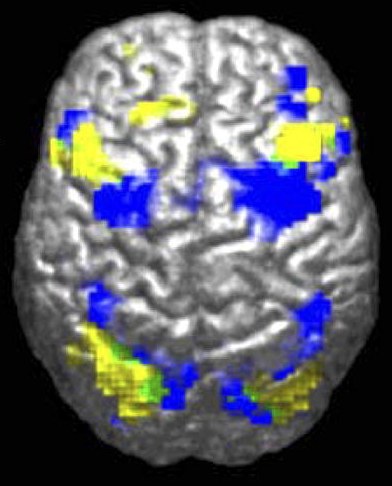
It’s true that different parts of the brain typically provide different functions. It’s just that the idea that some people are dominated by their right hemisphere turns out be conclusively wrong. But let me mix in another idea. It’s possible that thousands of years ago, minds weren’t so integrated and there were people who were dominated by the right hemisphere. More on that tomorrow.

Debunked: ‘Right-Brain’ and ‘Left-Brain’ Personalities — PsyBlog

Evidence from over 1,000 fMRI brain scans finds no evidence people are ‘right-brained’ or ‘left-brained’.

Categories
News Philosophy Politics

Your kids are competing in the real world hunger games

Here’s another reason why communized public school system is bad for us. I apologize in advance if any of this information stirs a small storm of cognitive dissonance for you.

Hunger Games for real

“Students can only have one serving of meat or other protein. However, rich kids can buy a second portion each day on their own dime.” This is from coverage of Michelle Obama’s national school-lunch regulations.

Protein-starving the peasantry so it will remain docile and biddable is a tyrant’s maneuver thousands of years old. I was unaware until today that this has become official policy in the American public school system.

How clever of them to sell it as a healthy-eating measure! That’ll get all the gentry liberals on board; of course, their kids will be buying that second serving.

Categories
News

Sismics Reader

Here’s another alternative to the now-retired Google Reader. This is a self-hosted solution that comes with an Android app, too. I have to admit, though, that Feedly is working really well for me.

Sismics Reader

Sismics Reader was started in March 2013 after the Google annoucement saying Google Reader will be closed 3 months later. Three months to do as good as a multibillion revenue company? Challenge accepted.

The first step was to copy paste all key features of Google Reader, then, give this application for free to anyone willing to host his own feeds reader.

Categories
Entertainment News

Parkour Moves Indoors

My kids love American Ninja Warrior. But what’s called Parkour today, used to be Freestyle Walking and the Ministry of Silly Walks before that. The sport has really come a long way.

Parkour, a Pastime Born on the Streets, Moves Indoors and Uptown – NYTimes.com

They are skateboarders without skateboards, urban acrobats who scale walls, hurdle mailboxes and leap between buildings in stunts that might give Spider-Man pause.

Practitioners of parkour, a daring pastime born in the streets, have long seen public spaces as their playground, and parkour as the ultimate rebel’s game, one with no rules, league, equipment or winners. It started in France (the name is derived from the French word for “course”) and has spread around the world: GazaTokyoRome and Miami are parkour towns.