Categories
News Psychology

Two sides to childhood trauma

We talk about stress exclusively in the negative, but languages offers two words: distress and eustress. The former is suffering that beats us down. The latter is struggle that makes us stronger. As with many things in life, not enough is as bad as too much. So, consider these two stories.

In the first story, scientists find distress in childhood leads to further struggles in adulthood. The surprise seems to be that PTSD in soldiers could be triggered by the loss of a support system offered by the military. How terrible must a family be to exceed the experience of war.

In the  second story, Peter Gray offers a view of teasing as a traditional, gentle method of correcting social problems. This is eustress that is communicating a corrective idea and simultaneously reminding the subject–you are safe. This is ever-present goal and challenge of the parent, to help your child find the right path while always reinforcing that your love for that child is unconditional and unlimited. The closer we move towards that ideal, the less chance anyone needs to find comfort amongst fellow soldiers.

Embattled Childhoods May Be the Real Trauma for Soldiers With PTSD – Association for Psychological Science

According to Berntsen and colleages, all of these factors together suggest that army life – despite the fact that it involved combat – offered more in the way of social support and life satisfaction than these particular soldiers had at home. The mental health benefits of being valued and experiencing camaraderie thus diminished when the soldiers had to return to civilian life.

The findings challenge the notion that exposure to combat and other war atrocities is the main cause of PTSD.

“We were surprised that stressful experiences during childhood seemed to play such a central role in discriminating the resilient versus non-resilient groups,” says Berntsen. “These results should make psychologists question prevailing assumptions about PTSD and its development.”

The Educative Value of Teasing | Psychology Today

Teasing gets a bad rap, especially in educational circles, because of its association with bullying.  But not all teasing is bullying.  In fact, in most settings (maybe not in our typical schools), teasing serves positive ends far more often than negative ones. This essay is mostly about the positive uses of teasing.
Categories
News

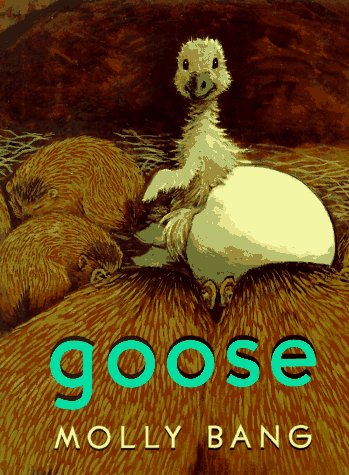
book, book, goose!

You can visit bookbookgoose.com, you will see a random book. I can appreciate the randomness. Maybe I should make something similar that searches for books using a random term from the dictionary.

Book Book — Goose!

I like to read. I love bookstores, I like to wander, and to find things that I didn’t know existed. But bookstores don’t have every book that exists. Amazon has most books, but search is a terrible way to discover new things. Amazon’s recommendations most likely maximize purchases, but are a terrible way to find something you didn’t know you were looking for (look at a book like Effective JavaScript, for example, and you get recommendations for Async JavaScriptBuilding Node Applications with MongoDB and BackboneJavaScript Enlightenment). Similarly, top 100 lists are great at showing you popular things that you’re probably more likely to buy, but not very good at helping you find a book with a story or idea that’s unlike anything you’ve read lately.

There must be a better way to explore books.

A random way to explore books would be a good way to start.

Hence, bookbookgoose. Browse randomly. Enjoy!

 Hint: use the ‘n’ key to go forward quickly. I find about .2% of the books are awesome.


Categories
News

When is a corporation not a person?

Government bureaucrats will tell you it’s when it’s in your car not helping you meeting the minimum two riders to be in the carpool lane. I’ll give you the straight dope, though. Just like Santa Claus and Jesus, corporations are never people.

Corporation not person in carpool lanes – SFGate

Jonathan Frieman, a 56-year-old San Rafael resident and self-described social entrepreneur, failed to convince a Marin County Superior Court jurist Monday after he argued that he was not alone when a California Highway Patrol officer pulled him over in October while driving in the carpool lane. Southern Pacific Railroad Co., and he offered evidence that a corporation was traveling inside his vehicle – riding shotgun, of course – then two people were in his car. Citizens United caseThe issue of corporate personhood rocketed to public consciousness in 2010, when the U.S. Supreme Court ruled in the Citizens United case that the First Amendment barred the government from limiting companies’ independent political expenditures. […] Frieman says he’s been driving stretches of carpool lanes along Highway 101 for the past decade with his papers in the front seat, waiting to get pulled over and set his legal battle in motion. Pointing to state lawFord Greene, Frieman’s attorney, pointed to California vehicle code section 470, which says the definition of a person includes “natural persons and corporations.” Before the hearing began, a television reporter called out to Dorn as he sat at the plaintiff’s table: “Don’t forget to smile!” The officer, dressed in a black leather motorcycle jacket and boots, smirked and appeared to chew at his bottom lip.

Categories
News

Sitting-rising test predicts how long you’ll live

Flop down on the floor and then get up. Did you need to put your hand or your elbow on the floor as you went down? How about when you got up? It’s a test and an exercise.

sit down and stand up to predict mortality

The idea is that some researchers have found that those who can sit down and get up using no hands are likely to live for longer.  The more that you have to use other parts of your body – elbows, knees etc to help you up then the more mortality is affected….

Enhanced by Zemanta
Categories
News

Norm Macdonald resolution to gamble more

Norm Macdonald is funny and under-appreciated.

Norm Macdonald’s Keeping Resolutions, Vol. 1: A Plan in the Desert – The Triangle Blog – Grantland

I like to gamble. Gamble money on sports. I don’t drink, smoke, do drugs, or frequent, or even occasion, prostitutes. But I do like to gamble. Gamble money on sports.

I’m not alone, of course. People who like to use big numbers say that sports betting is a multibillion-dollar business in these United States. And most of that money is wagered on professional football.

I’ve been told I have a problem. A psychiatrist once said that I gambled in order to escape the reality of life. I told him that’s why everybody does everything. But he had a point. There’s a certain arc to my gambling sprees. An arc that begins with me making modest bets after much study, then ends months later with me having no money.

Enhanced by Zemanta