Categories
D&D Games

Wooden Tokens Instead of Lead Figures

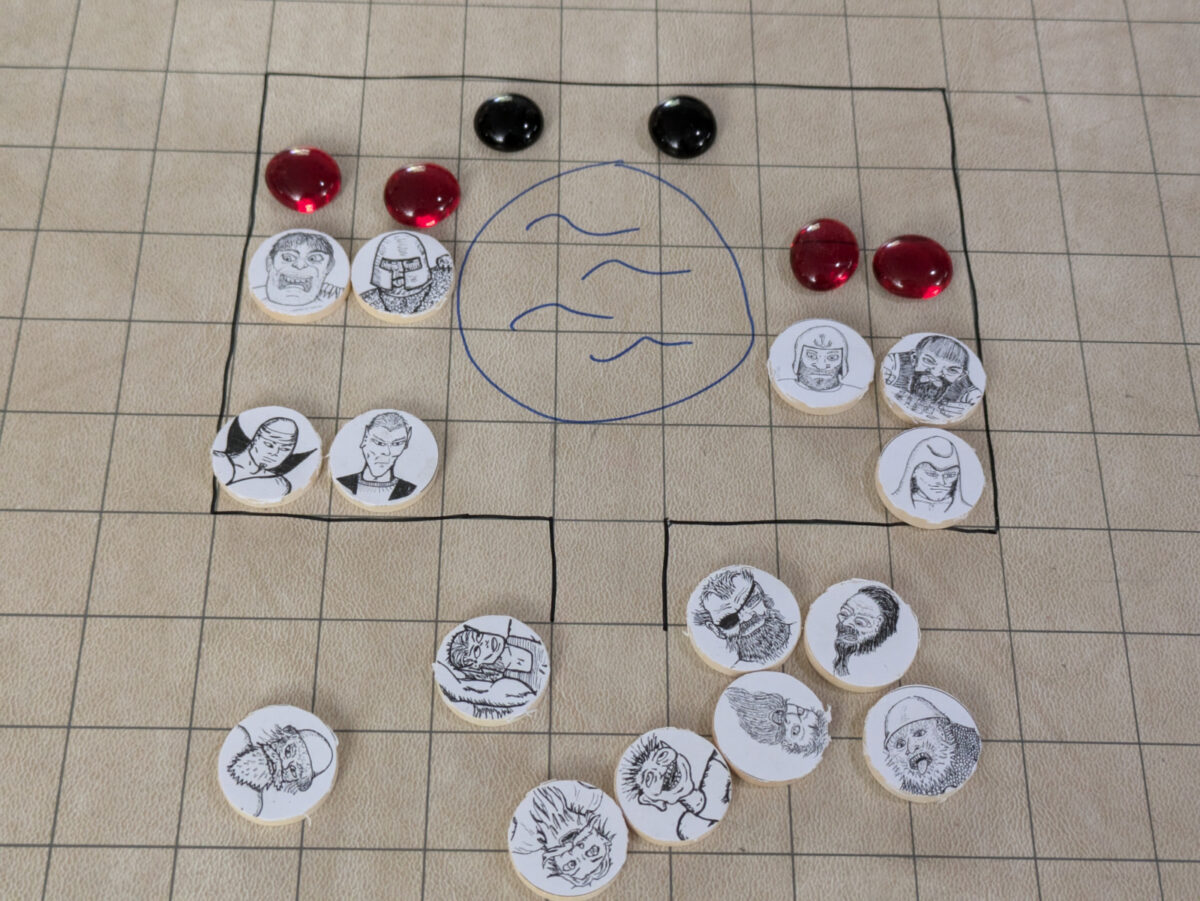
As a game master, I default to theater of the mind, but most of the other players like to see maps, especially during combat. We compromise by me only going to the battle mat if the fight’s going to be long or complicated. I don’t have a big collection of figures. I do have a bunch of glass beads of difference colors, which are fine for monsters. I wanted a solution for individual PCs that wasn’t going to cost a bunch of money. I tried using binder clips with a strip of paper inside with the PC name. They were unstable. My new solution is a wooden token with a picture glued to one side.

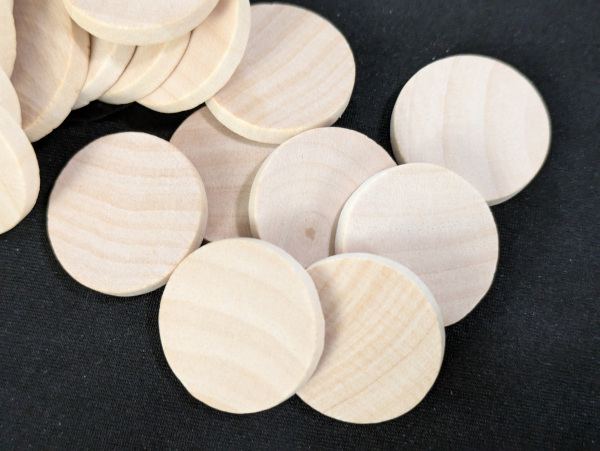
I bought a bag of wooden tokens on Amazon. They are 1″ across and 1/8″ thick. About $10 for 120 of them.

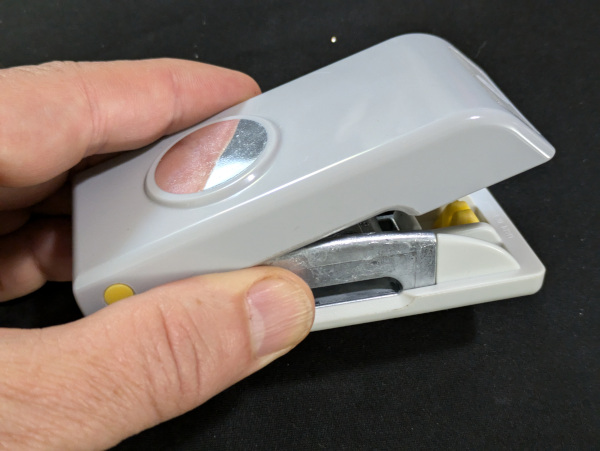
I also bought a hole punch that makes 1″ holes in paper. It’s a supersized version of the tool you’d use in school. It cost about $11.

When you flip it over, you can see through a window of what you’re about to cut out. That means you can cut out a disc of paper exactly around some picture you want to glue to the wooden token.

I looked over my drawings I make for my game log. I have faces for just about every active PC in the game. So, I put 1″ circles in an image in GIMP and pasted in faces from drawings. I scaled them down and trimmed them into a disc shape. Then, I printed out the whole sheet and started stamping out the discs.

The punch tool will reach a couple of inches into a sheet of paper, so I did the first row, then cut that line off the sheet so I could get to the second row. Finally, I glued each little disc of paper to a wooden token. That took about an hour for about 20 of them.

The paper was a tiny bit bigger than the wood. I solved this with a quick pass with sandpaper that shredded off the extra. I used a glue stick, the kind that’s “disappearing purple”.

Categories
News

Alaska Trip

It’s been a few years since the four of us vacationed in a new and distant location. It didn’t seem realistic during the pandemic years, and travel was mostly limited to camping in California and visiting family in Utah, though we did make it to Tucson. This year, things worked out for a 10-day trip to Alaska. As is our way, Vicky did all the planning. She made sure it worked with everyone’s schedules: Henry’s concerts, Tre’s conventions, and college classes starting up in late August.

I didn’t have many specific expectations. I like to visit used book stores when we travel, and there were a few around where we’d be, but none that were particularly interesting. I was hoping to eat fresh seafood every day. I knew we’d be on boats a few times, but I didn’t think too much about it. I figured I’d be relaxing, reading and drawing. Vicky, naturally, was hoping to spot birds. I don’t know what Tre or Henry expected.

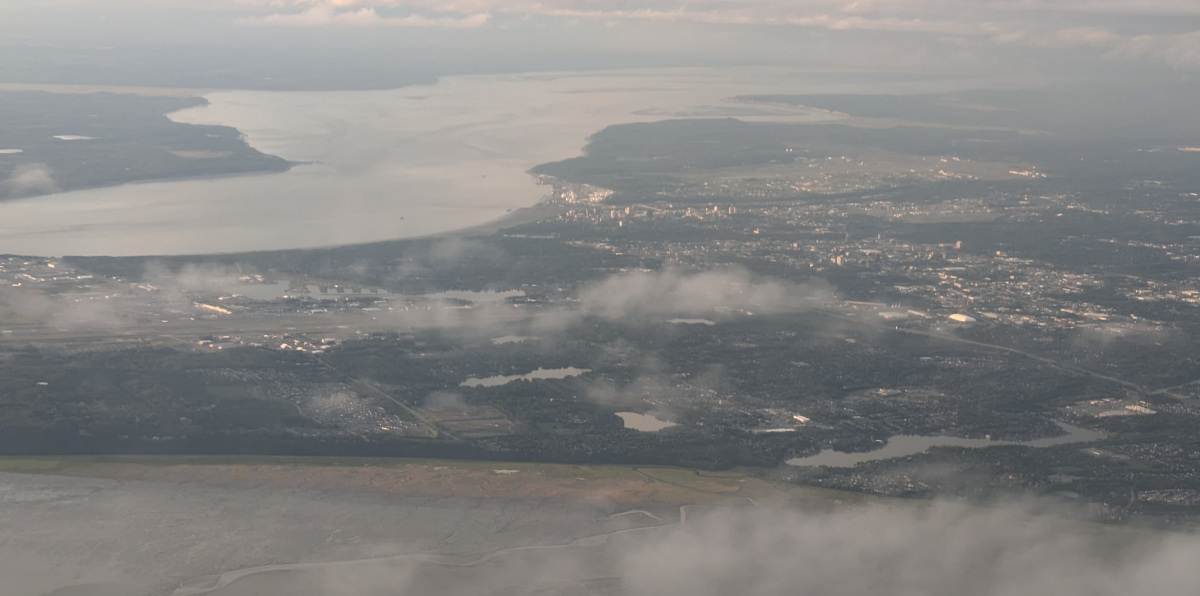
We flew out of SFO in the afternoon and landed in Anchorage around 9pm local time. This time of year, it doesn’t really get dark there until almost 11pm. The extra light distorted my sense of time. It’s already hard to sleep in strange surroundings. Shifting one timezone earlier and then having the sun still above the horizon so late was strange.

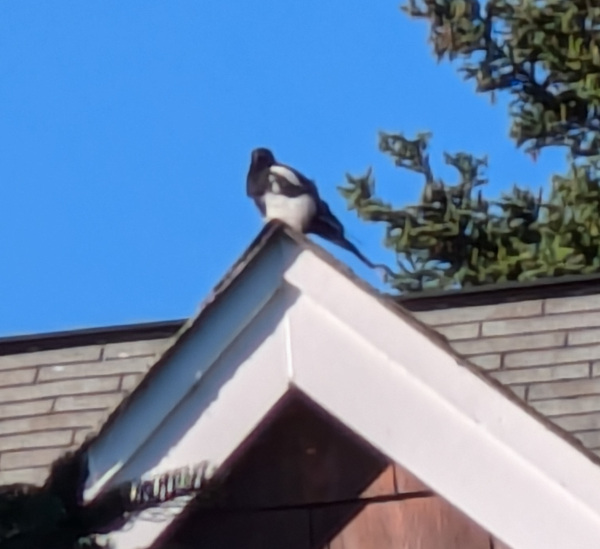
The next morning, Vicky and I walked around a lagoon in Anchorage while the boys slept in. She was looking for birds. I was trying to circle the whole lagoon, which involved walking through a neighborhood street. I snapped a picture of a magpie on the roof of a house. It seemed bigger than typical to me. A guy walking his dog quizzed me about why I was taking a picture of his neighbor’s house. I don’t know what kind of mischief he thought I might be up to taking a picture with my phone.

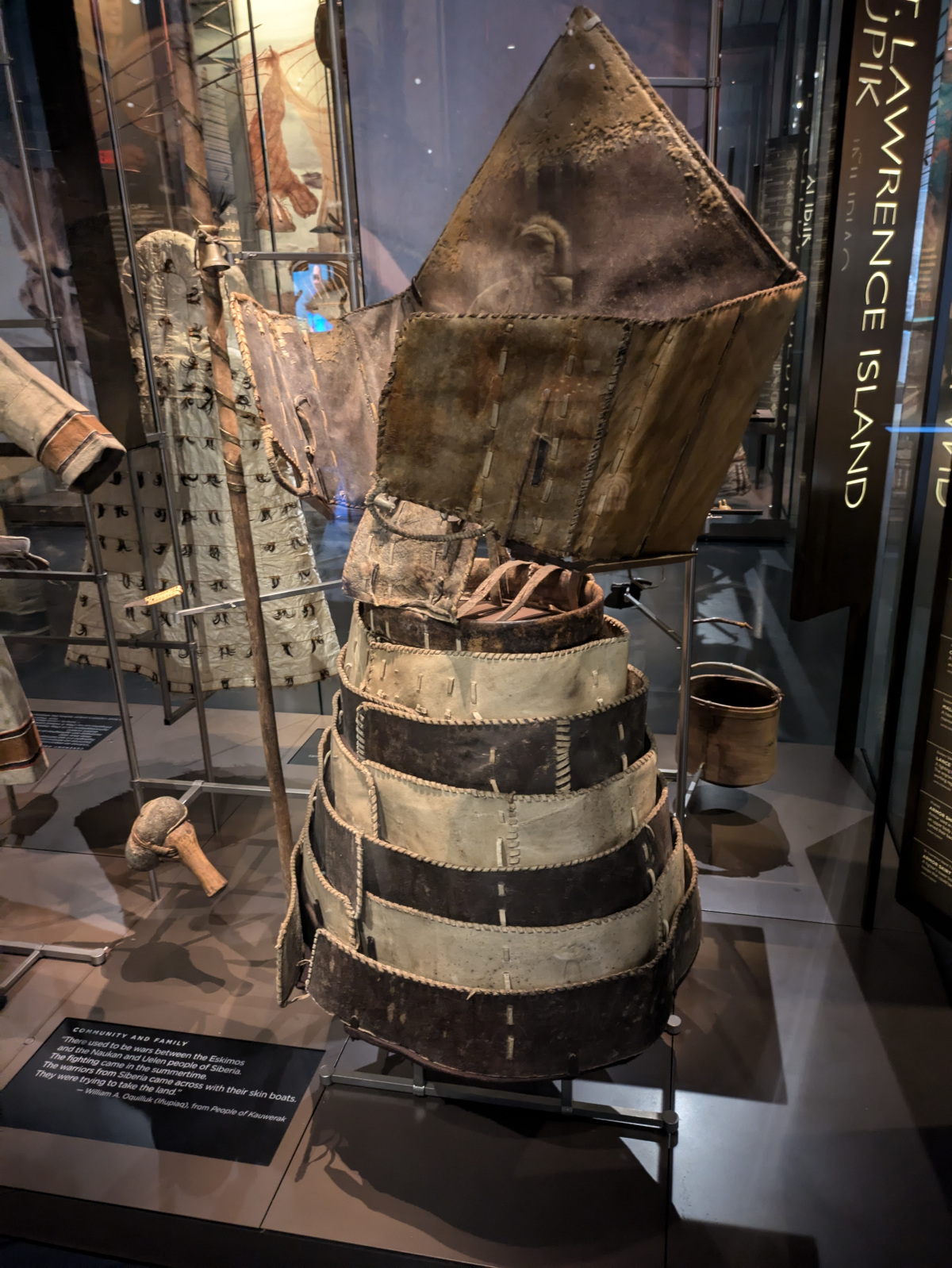
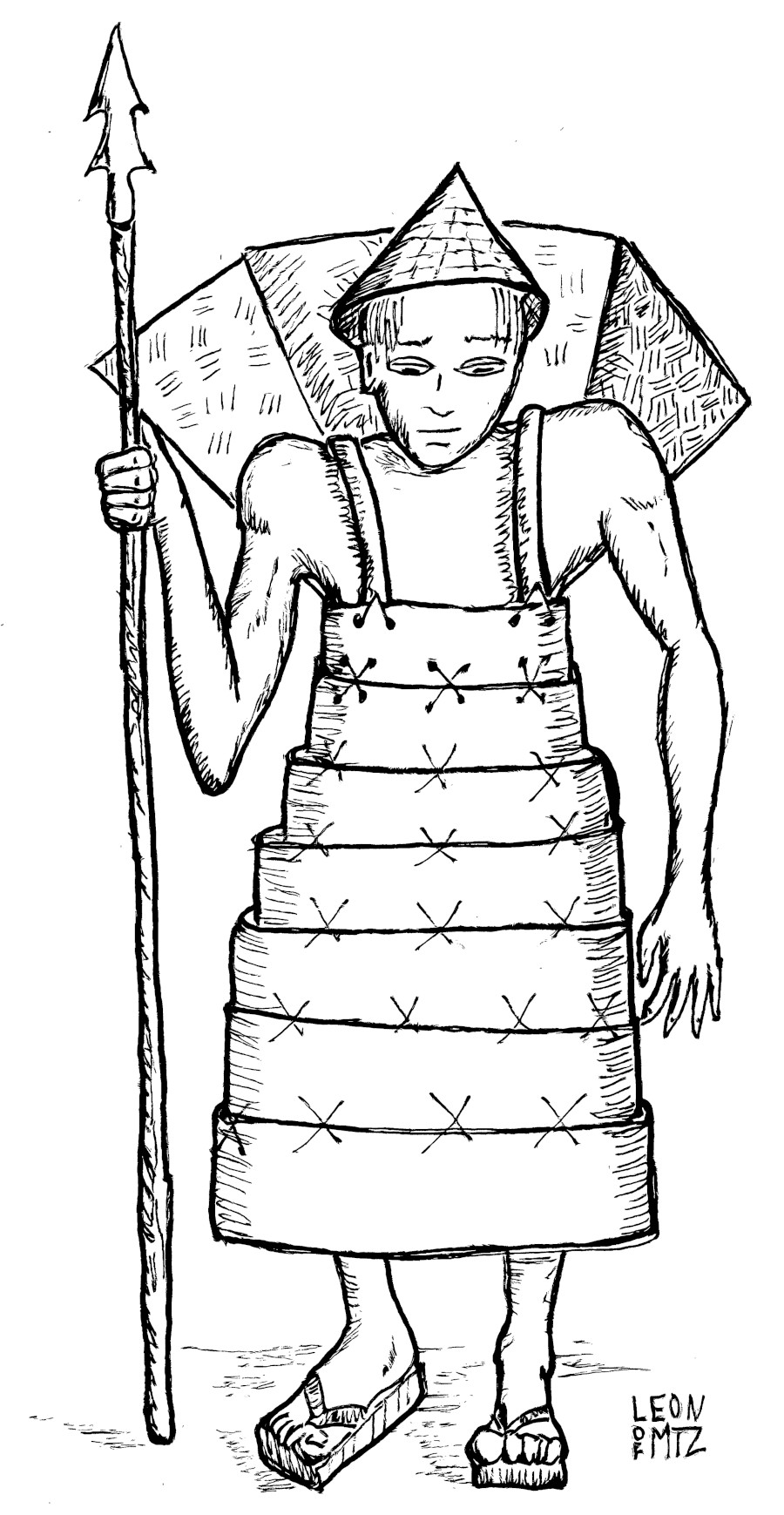
Later that day, we visited the museum in downtown Anchorage. Among the displays was unusual leather armor. It used a cone of leather strips to form a skirt held up by suspenders. Behind the head was a shield, meant to catch arrows fired from the rear. The next day, I sketched what a warrior in such armor might look like.

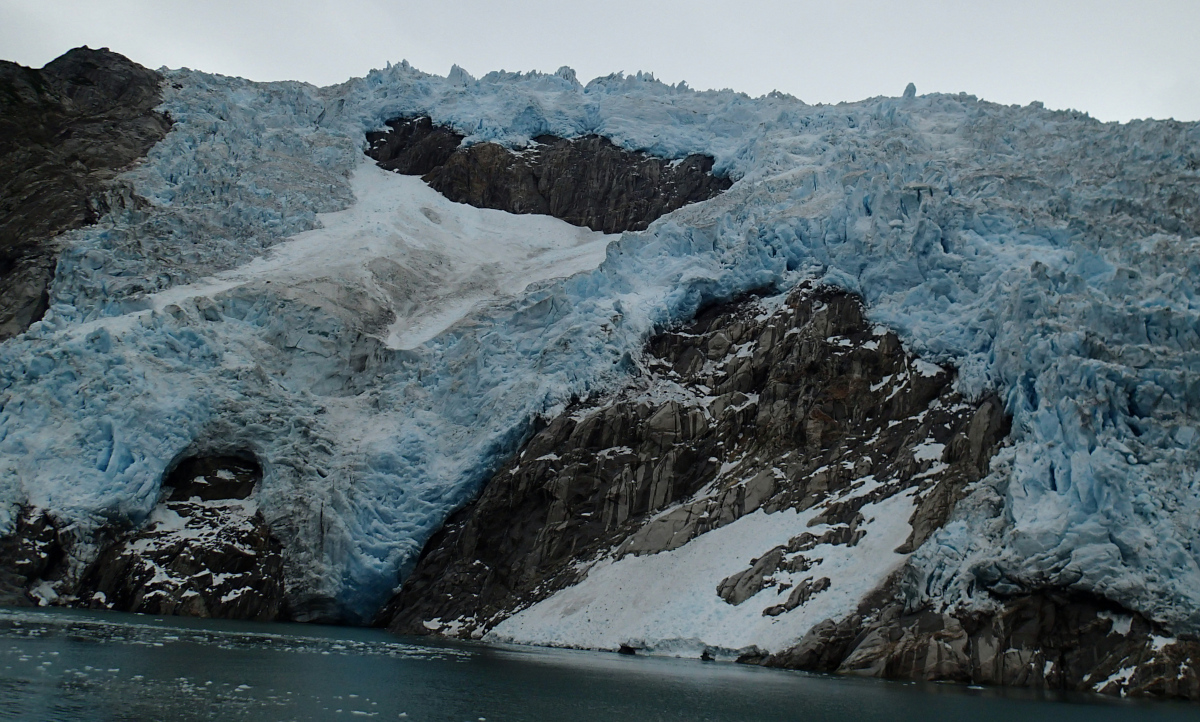
We drove down to Moose Pass, which is about 20 minutes north of Seward. Along the way, we stopped to look at wildlife and to hike up to see a glacier. The day in Anchorage had been sunny and cool. The drive to Seward dropped some light rain on us. The next day, we spent the whole day on a large boat that took us to the Kenai Fjords to see a glacier slowly dropping ice into the ocean. The overcast day enhanced the blue tones of the ancient ice.

On the way back from the glacier, whales were spotted. The first we saw were sei whales. They were just cresting the water in the distance. The real excitement came from the humpback whales. The boat had underwater microphone so that we could hear the calls as the whales chased fish to the surface with curtains of air bubbles. Soon, the gulls would begin diving on one spot followed by the sudden emergence of several gargantuan whale heads. We saw several rounds of this feeding activity.

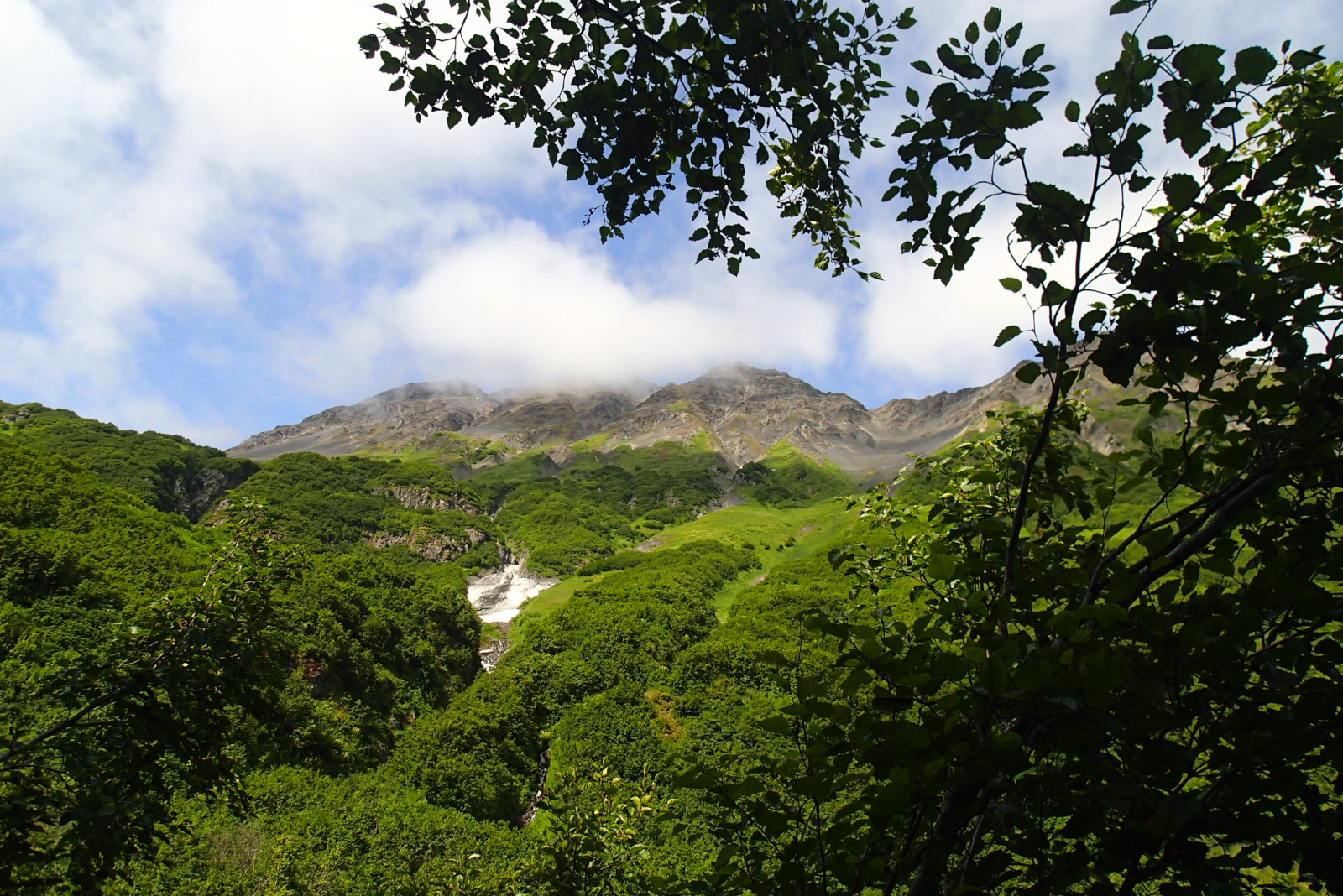
The next day was Tre’s 21st birthday, and we celebrated with a vigorous hike up to Exit Glacier to see the Harding Ice Fields, which is the big expanse of ice over the top of the mountains. The ascent is about 3,000 feet of elevation over about 4 miles. It added up to over 10 miles of up and down. The first part of the trail was a series of stone steps, but then we climbed above the tree line and then across loose gravel and patches of snow. The change from lush rain forest to barren mountaintop was dramatic.

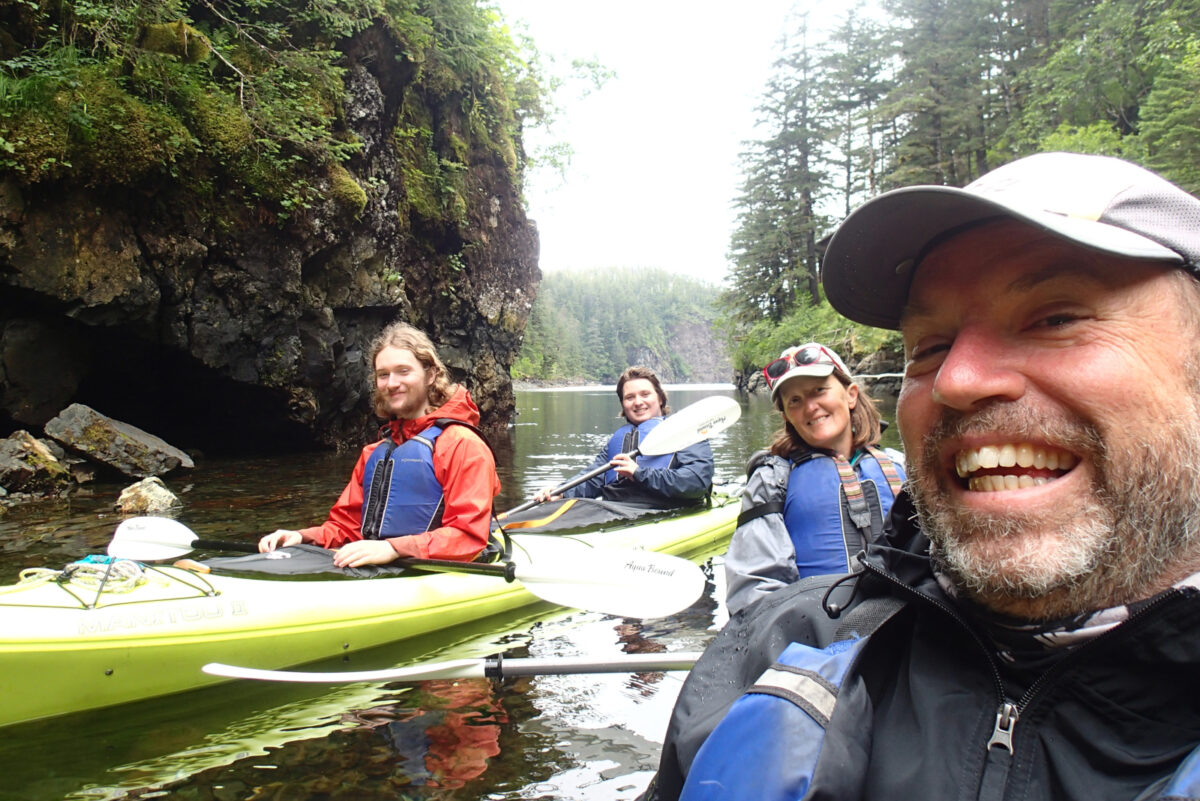
The next part of our trip was spent camping on a remote peninsula across Resurrection Bay from Seward. We left our rental call and half our luggage behind for a 40 minute boat ride to Shearwater Cove. Yurts sit on stilts in a narrow canyon. That night, Vicky and I went on a guided kayak tour to a nearby island and then we all relaxed in the yurt, which offered small kitchen and a heater. The weather that day and the day before was perfect. The following day, a storm rolled by the afternoon and delivered heavy rain. However, we managed another kayak trip in the morning to see spawning salmon in a nearby cove.

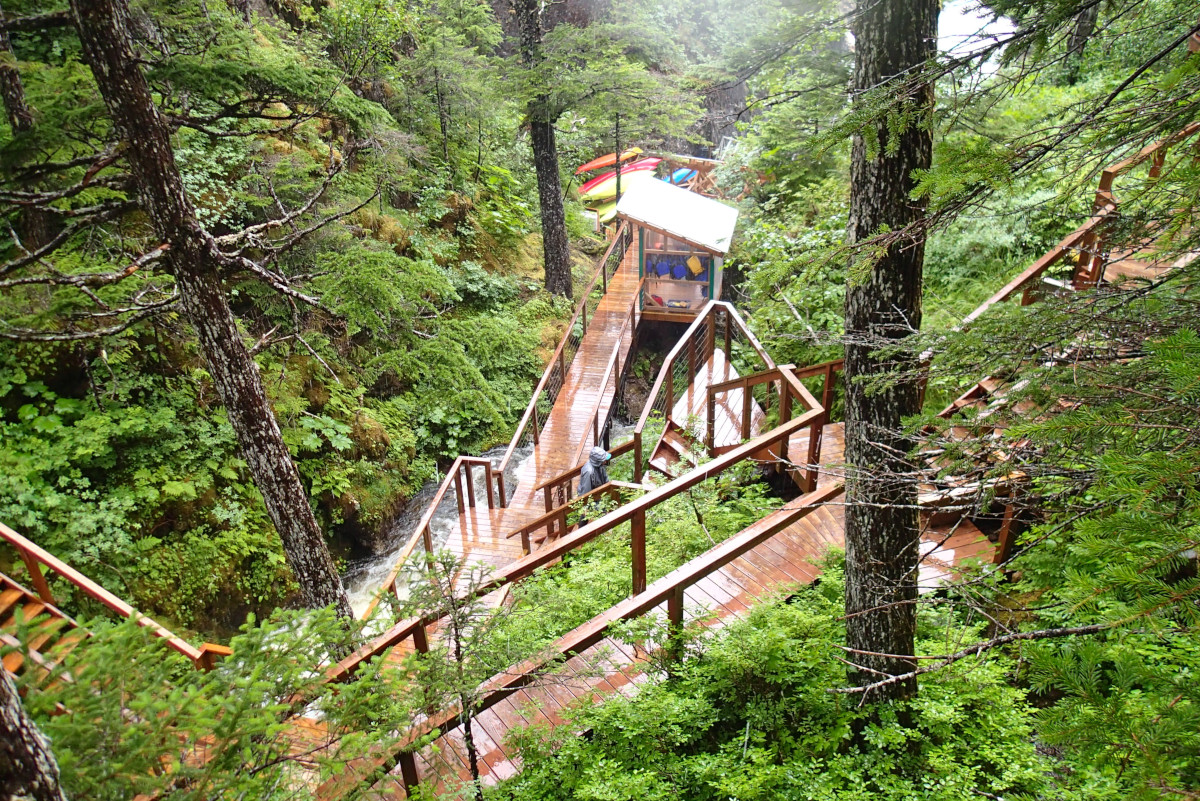
Shearwater Cove can only be reached by boat. A little creek runs through canyon. It became a raging river overnight. The operators have put in many yurts which are connected by series of decks and stairs. There are several trails to explore with wild blueberries and salmon berries to pick along the way. Propane powers a heater, a stove and a shower for each yurt. It was very comfortable except that we were four adults crammed into a 20-foot yurt.

This has been a challenge for us that’s intensifying over time. We no longer have the dynamic of the two adults who can dictate a schedule to the two kids. We’re four adults with different preferences, including some preferences for solitude that are hard to satisfy on the road. We definitely got cranky with each other at times.

We wrapped up our trip by driving north, past Anchorage to Talkeetna, which is a tiny town at the foot of Mount McKinley (aka Denali). The original plan was to catch a good view of the mountain, but the weather didn’t cooperate. We even tried driving north for an hour with no luck. The rain wouldn’t let up. The last day was spent driving back to the airport and flying into SFO.

Other places we’ve visited offered unique food. In Cancun, we’d eat mangoes every day, plus restaurants would serve regional dishes, all of which we’d want to try. I figured on lots of fish in Alaska. I imagined eating fresh salmon every day. It didn’t turn out that way. There are a lot of breweries in Alaska, but I’ve given up drinking beer and anyway, there are plenty of similar breweries in the Bay Area. The one delicacy we ran into was birch syrup in Talkeetna. None of the food was bad. It was just relatively generic American.

I also often look for used bookstores on trips. That didn’t work out. There weren’t any interesting places in Seward or in Anchorage proper. I think I saw more used bookstores near Homer on the map, but we didn’t make it that far.

I went into the fjord cruise with neutral expectations, but it was a really interesting day, and amazing to see the whales fishing. The experience at Shearwater Cover was probably the highlight of the trip. The vibe was so friendly. Other campers were sharing a good mood.

Overall, it was a good adventure.

Categories
Basic Fantasy RPG

Chrysogon’s Coterie

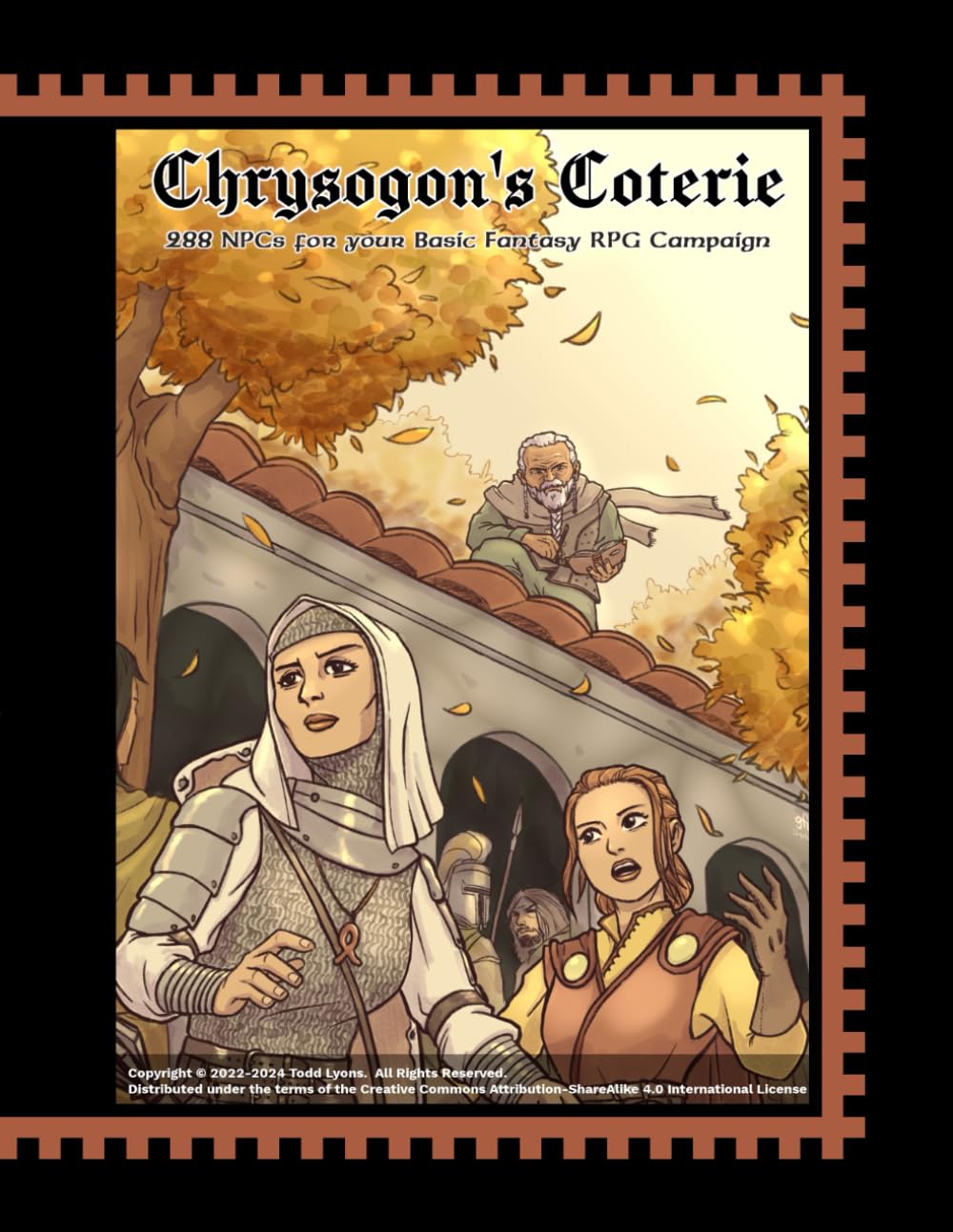
What is Chrysogon’s Coterie? It’s the latest supplement released by the Basic Fantasy RPG project. That’s the group of people led by Chris Gonnerman who collaborate on an open source version of D&D. The supplement collects 288 NPCs for you to drop into your campaign.

Who’s Chrysogon? He’s a 9th level dwarf with a penchant for snooping on everyone around him. Dwarves are known for being suspicious of others and dour of temper. This guy punches all the buttons. You’ll have to read the book to learn more. If you can trust him, that is. Chrysogon isn’t even his real name!

What’s a coterie? It’s an intimate group of associates, in this case a bunch of adventurers with various connections between them, the most prominent being that that a devious dwarf has revealed some of their darkest secrets. It would be scandalous if it weren’t all so imaginary.

Which is to say this book is the product of the fertile and verdant imagination of Todd Lyons. Fertile, because, well, look at the bounty of interesting characters. Verdant, because this is his first go at writing an RPG supplement. It’s appropriate to have bloomed in the Spring. It’s so full of fresh ideas, and not at all a bland rogue’s gallery.

I read through the text and provided feedback in November 2022. (It takes some time to assemble a printed book, especially when all the labor is volunteer). In one aspect, it’s a story. At more than a hundred 8.5″ x 11″ pages, the word count probably qualifies it as a novel. There are plenty of characters with backstories to dive into, but of course, there is little plot, which is exactly what you want from an RPG supplement. The story emerges from the play of game.

The primary aspect of the book is as an aid to the game master. On the fly, you can flip to any page and pull out one of the NPCs. Read a couple of paragraphs and start role-playing the random adventurer your players just met. The description will provide a few mysteries for the the PCs to wonder about as well as a few pointers to other NPCs in the book. You could do this for a long time because there are 288 entries: eight for the four primary classes (fighter, magic user, cleric, thief) over nine levels. That is, if you need a ninth level magic user, flip to the end of the book and there are eight to choose from.

The descriptions of the NPCs are wild. They do not present as thin frosting over a trope cake. These personalities are quirky and true to life. When I first started reading through the text, I had this weird feeling that one of two things was true–either Todd was possibly a little disturbed or else he had a background in psychology. Some of the NPCs have been through serious emotional trauma.

Some kids are exposed to the trade early. An orphan, Tycho was adopted by two thieves posing as a married couple and then sold at a slave auction for a profit. Thus, he has no faith in anyone’s intentions, regardless of how genuine they seem. He had many failed escapes and endured many more beatings before finally fleeing beyond his owner’s reach. Unusually resilient, Tycho learned how to be a successful thief the hard way—getting caught, surviving, and learning to do it better. He is an extreme risk-taker and is very comfortable with improvising on the job. Nothing ever goes as planned anyway.

Tycho Cruscellio, Chrysogon’s Coterie page 75

Yikes! But look at all the flavor packed into that one paragraph. Tycho had a tough life, and you can’t blame him for being pessimistic, but he’s a survivor. Your party would be lucky to have him picking locks and disarming traps hundreds of feet down in the underdark.

Unsurprisingly, Todd has a background in social work and adolescent mental health. The artist reveals a bit of his soul in crafting his work. Todd demonstrates an understanding of the human condition as well as a deep caring for the characters in the book.

These characters have depth. You can understand their motivations, which means they are easy to play. I suspect why we see such innovation in this work is due to a focus first on passion for the hobby rather than a cynical stab at meager profits in an over-saturated market. You can get this book in print for about five bucks. You can read it for free by downloading the PDF. This is the ethic of the BFRPG project.

Aside from the text, you’ll find plentiful illustrations from various artists, including an inspiring cover by Gabe Fua. The production of these works requires collaboration from many different roles. The level of editing poured into these books is phenomenal, ranging from copy editing to technical editing. Plus, a delicate dance must be done with Libre Office to get the typesetting to work. The BFRPG community is singular in its ability to cooperate and produce highly valuable works. Even if you use another flavor of D&D, the Coterie will provide great value. The meat is all in the characters and their relationships. The stats are easy enough to convert.

So, congratulations to Todd on the publication of Chrysogon’s Coterie! I’m grateful for his continuing contributions to the BFRPG project.

Categories
Basic Fantasy RPG Creative Pursuits D&D Poems

Spell Rhymes of the Second Level

Here’s another installment of my short poems mages and clerics can utter while casting spells, this time of the second level. I previously wrote rhymes for first level magic user spells and first level cleric spells.

Continual Darkness

Inky darkness, down you clamp.
Spread and stifle beacons all.
Let no candle, torch, nor lamp
Shine its light beyond this wall.

Continual Light

Now from star and sun comes light
That spreads and stays forever long.
A shining beacon, true and white,
Proclaims the virtue of the strong.

Detect Evil

Open I pry my eyes to see
Any evil threats to me.
Glow, you creatures from planes beyond.
Open, eyes! Respond! Respond!

Detect Invisible

Spirits hiding from naked eye
Reveal yourself by outline drawn
With silv'ry pen of open sky
That shines your shape with bolts of dawn.

Invisibility

Descend yon darkened veil upon
Searching eyes now clouded, unclear.
You once were here, but now you've gone.
And with this touch you disappear.

Knock

For sticky door or stubborn key
With gentle tap, I now unlock.
To raise the bar and gain entry
Three times on solid clasp I knock.

Levitate

Now, rise by unseen hand. Soar high!
Keep floating while I concentrate.
Drift up from earth and towards the sky.
Behold the one that levitates.

Locate Object

By hoary hosts and spirits strange,
Upon my thoughts be fixated.
If found it could be within range,
Let now the thing be located.

Mind Reading

Thoughts are waves that through ether ride
Into my probing mind to scan.
The secret consciousness resides
And fills the space. My mind expands.

Mirror Image

Swirling, twisting, false images
Mimic form of magic casters.
Every strike must hit visages
Until final figment falters.

Phantasmal Force

A vision projects from my mind.
A silent illusion appears.
Concentration keeps it confined.
By doubt or touch the image clears.

Web

Like spider silk but more secure,
Now sticky strands extend and bind.
If ignited, let flames endure.
Entrap my prey in threads entwined.

Wizard Lock

Magic lock hold this portal fast.
Let wizard's knock only through.  
Make a seal that forever lasts,
So secret treasure hide from view.

The clerical spells follow.

Bane

Oh lord on high, fill my body
With a spirit inspiring dread.
Attacks will fail, and foes will flee,
Who within fifty paces tread.

Bless

Bless my friends, oh holy father.
Let courage fill their very hearts.
Pang of fear can never bother
Those who honor thy holy art.

Charm Animal

Music calms the savage beast, and
So do words most gently spoken.
That same creator joins our hands.
Friendship ties are now awoken.

Find Traps

Any peril laid by evil
I pray to see out before me.
Traps by glowing will be seen full.
Trust have I in him most holy.

Hold Person

Let glory hold thee in splendor.
My will is force, which I will prove.
Though mind is awake, surrender.
Limbs, be stiff unable to move.

Resist Fire

Fire harms none who honor the name
Of precious lord whose prayer they spoke.
Like saints of old who walked through flame,
Let faith provide a cooling cloak.

Silence

A globe of silence honors most
The one who spoke the world's first word.
In this moment speak no boast
Nor let no arcane spell be heard.

Speak with Animals

Creature made by the same divine,
Listen and understand my voice.
Converse with me if you incline.
To speak with me remains your choice.

Spiritual Hammer

By fervent faith in holy might
I call forth his awesome clamor.
Let my enemies quake in fright
From my spiritual hammer.

Update: see more Rhymes for Spells.

Categories
Games

How to Enjoy a Game

Perhaps it is absurd to offer advice on how to enjoy a game. Isn’t the point of a game to provide enjoyment? Not necessarily. Some games are serious and meant to discover information, such as Model UN simulations. Some games asymmetrically provide enjoyment for some players and torment others, such as a game of keep-away played by a couple of bullies who’ve just stolen your hat. But let’s narrow the discussion to games meant for the enjoyment of all players.

I’m about to get Aristotelian for a moment. For many human endeavors, there’s a range between two extremes, inside of which is a preferable middle. Not enough courage? You’re a coward. Too much courage? You’re foolhardy. That’s the Aristotelian mean. One range applied to games is the balance between what’s under your control and what’s beyond all control. You can use this balance to understand how best to enjoy the game.

Webster’s 1828 definition of game includes the following.

3. An exercise or play for amusement or winning a stake; as a game of cricket; a game of chess; a game of whist. Some games depend on skill; others on hazard.

https://webstersdictionary1828.com/Dictionary/game

The first definition is just sport, but that’s to broad. We’re talking about an exercise, that is a series of procedures, meant to induce amusement by way of a winning condition. Games can require skill and they can present hazards. Skill is the beneficial application of the rules to enforce one’s will on the game condition. Hazards are events produced by the game beyond the control of the player.

Games have rules. Generally, the rules don’t change during the course of a game session, though there can be games with rules for changing the rules themselves. That’s getting a bit meta, so we’ll set it aside. The rules specify the actions a player can make within the context of the game. The player makes choices from these rules towards some personal satisfaction, usually to the win the game.

Most games offer an element of chance. These are the hazards beyond the control of the player. They may come in the form of dice, cards or even the inscrutable actions of an opposing player. Defeating the hazards, that is, getting your way despite them, is one way to feel satisfaction at the end of a game. This could be described as the agency theory of fun.

Consider a game at the extreme end of the range when it comes to randomness: Candy Land. This is a boardgame that simulates a race. A path leads from the start to “Home Sweet Home”. Players take turns drawing cards which direct the player’s token to advance to a colored square. The game offers no choices whatsoever. The result of the game is determined by the randomness of how the cards were shuffled.

Candy Land is not a fun game for anyone but toddlers. Youngsters who have not yet learned to count can still find some satisfaction in challenging themselves to follow the rules by matching colors. Sadly, there other games of extraordinary complexity that offer as little choice as Candy Land. Perhaps adults find these games amusing in the same way. The challenge lies in following obtuse rules.

What about a game with no hazards, no resort to luck? It would be natural to think of chess, checkers or go. These games have no element of chance such as a deck of cards, but they do offer the challenge of an opponent whose actions you cannot control.

To eliminate all uncontrolled elements, we must find a game with a single player. We can’t choose klondike or similar solitaire card games because those rely on a randomized deck of cards. We end up considering an activity with rules where only our own choices matter. Is writing a poem still a game? Whether it’s a sonnet or haiku, the poet must follow some scant rules.

Putting together perfect iambic pentameter with consistent rhymes is a difficult challenge that can be solved with many interesting choices. Once again, we find the game itself to be lacking while some enjoyment can be found in struggling with a personal ability to follow the rules.

Have you ever found that certain experiences tip over from being unenjoyable to being enjoyable when you add something outside the “rules” of the game? Maybe it’s the cake or the keg that convinces you to attend the party. Aside from intoxicants, maybe you indulge in meta behavior during a game, such as role-playing as a snobbish socialite while playing Monopoly or tormenting your fellow Risk players with insults in order to distract them from good play.

They key is recognizing where the game falls on the spectrum between hazards and skill. And speaking of intoxicants, I am reminded of The Serenity Prayer, or the first part of it, anyway.

God grant me the serenity
To accept the things I cannot change;
Courage to change the things I can;
And wisdom to know the difference.

Reinhold Neibuhr

Look for the balancing procedures in a game. Most games will have the hazard of other players. Any cooperative game must make up the difference in some way, else it will creep too far towards staleness of “everyone agrees on this one best choice”.

Look for the skills required by the game. Developing those skills over time will be a separate meta-game played against yourself as you “get good”. As your skill increases, your ability to apply your will into the game state increases, as does your enjoyment. You achieve more and more agency.

When a game contains more randomness, you can accept that these are elements you cannot change. Focus on what you can change and don’t worry so much about what you can’t predict. As you develop the wisdom of knowing the balance between hazards and skill in a game, you can detach from any frustration that comes from lack of control.

Finally, my advice is to recognize opportunities to step outside of the game rules themselves to find amusement. Where the rules are silent, your will has free reign. Roleplaying games offer huge gaps in the procedures for injecting your own creativity for everyone’s amusement. Nothing in the rule book requires you to talk like a pirate, but it’s a choice you can make if it pleases you.

And after all, the point of playing a game is to have fun.